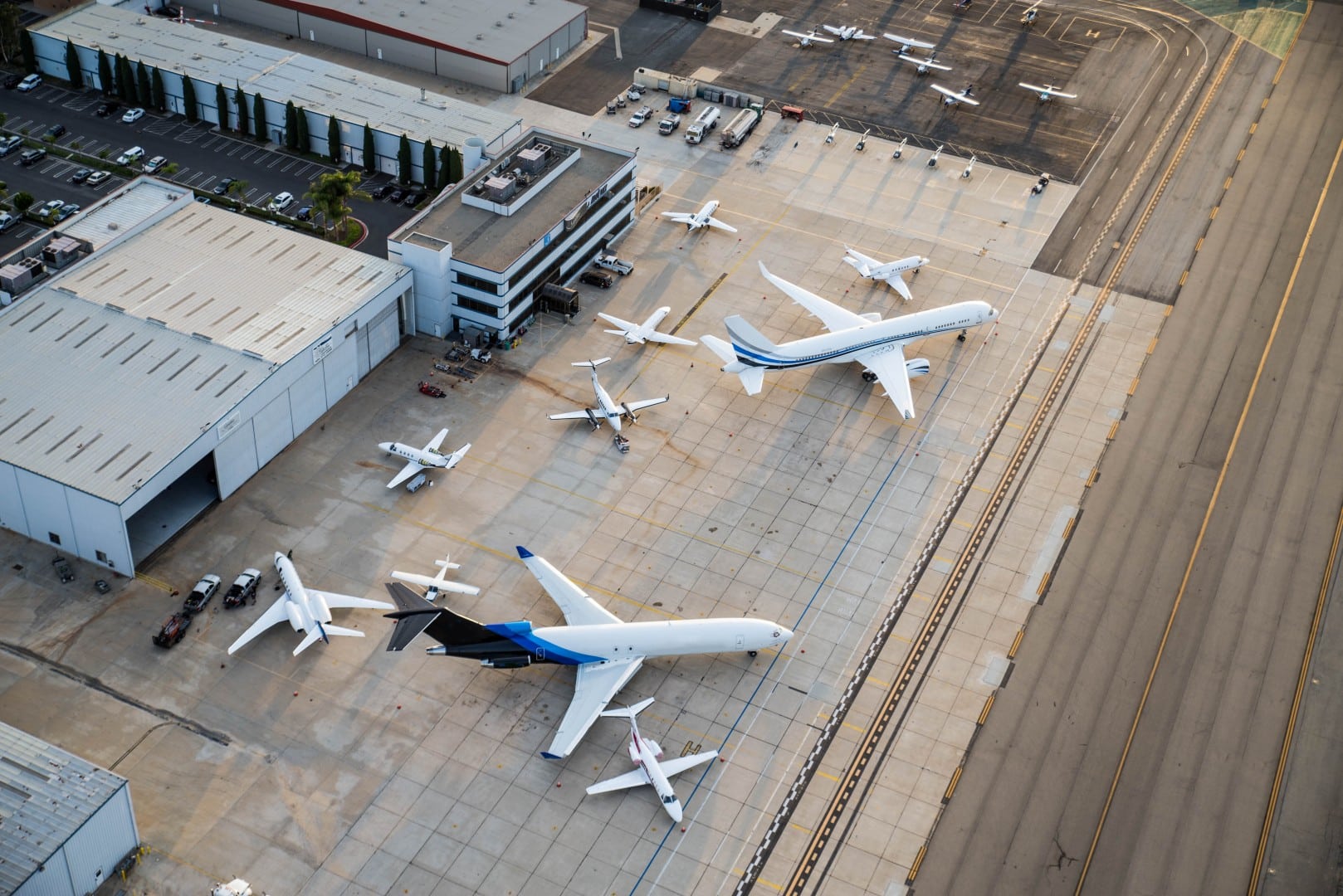
Picture two neighbors in Snohomish County who book flights to the same city on the same day. One walks into a terminal with fireplaces and reaches the gate within minutes. The other drives south on I-5 and is still hunting for a parking spot.
They simply picked different airports, and around Seattle that choice matters more than most people expect. Paine Field (PAE) sits in Everett, Seattle-Tacoma International (SEA) lies in SeaTac, and your address usually decides which one wins.
Sea-Tac is the airport most people picture, yet it isn’t the closest option for everyone in the Seattle area. From Everett, it is roughly 40 miles away, which means about 50 minutes in light traffic and considerably longer when I-5 gets busy. That’s a fair amount of driving before you’ve even reached the check-in counter.
For people living in Everett, Paine Field is the closest option by a wide margin. Its passenger terminal sits at 3300 100th Street SW on the southwest side of town, making it a much shorter local trip. That difference matters most for early departures, when getting out of bed is already enough of a challenge.
The same geography favors neighborhoods just south of Everett, where PAE is generally the closest airport to Lynnwood. It’s also worth considering Mill Creek and Lake Stevens, though the distance depends on your address.
The terminal feels more like a hotel lobby than an airport. The parking lot starts within about 30 feet of the entrance, and a short ramp leads from there to security. Beyond the checkpoint, two gate areas flank a waiting room with fireplaces and armchairs. It is a rare airport where the seating comes with a mantel.
The food matches the setting, too. A coffee shop operates before security, and Beecher’s Handmade Cheese runs a café past the checkpoint. You can eat mac and cheese within sight of your plane.
The tradeoff is the map. All Paine Field commercial flights run on Alaska Airlines, with nonstop routes to Los Angeles, Portland, San Francisco and San Diego. Alaska has been adding frequencies and larger jets, but its destination list remains short. Routes also change with the seasons, so check the current list before you book.
SEA wins on reach. The airport serves far more domestic routes and adds nonstop flights to Europe, Asia, Canada, and Mexico. A direct flight from SEA can easily beat a closer airport that makes you change planes in Los Angeles.
That matters most when a deadline waits at the other end, like a Friday morning meeting after a Thursday flight. SEA also offers more departures on busy routes, so a delay still leaves you with a later flight to catch.
Anyone looking at airports near Bellevue, Washington usually lands at SEA anyway. The stretch between Sea-Tac and Bellevue covers roughly 20 miles, and I-405 through Renton tends to slow in the afternoon.
The PAE vs SEA contrast becomes clear once you enter the terminals. Paine Field has three TSA security lanes and gates a short walk away, so there’s less ground to cover with luggage. Beyond security, you can settle in near your gate because no other concourse waits far away.
SEA is considerably larger, with six concourses, more dining options, and an underground train connecting different parts of the airport. Passengers departing from the N or S gates need to take the SEA Underground train, adding another step between security and boarding.
Even at PAE, arrive by the time your airline recommends, since a compact terminal doesn’t change check-in deadlines. At SEA, it’s worth checking where your gate is when you pick a restaurant, unless you fancy crossing the terminal twice.
The ground options differ, too. PAE reserves areas for taxis and shuttles and adds local bus connections. SEA also has Link light rail, but reaching the station means walking through the airport’s parking garage. For an 11 p.m. landing, checking bus and rail times becomes particularly important, especially if you’re carrying luggage.
At Paine Field, the passenger terminal has a designated ground-transportation area just outside. SEA spreads its services across several locations, depending on whether you’re taking a taxi, rideshare, or a prearranged vehicle. Knowing which area you need can save some wandering after baggage claim.
When booking your flight, a few questions can help you compare the two airports:
If Paine Field has a convenient nonstop flight, its location may make it the better option for flyers north of Seattle. Otherwise, SEA’s wider flight selection might be worth the longer drive.
Somewhere between comparing flight times and checking baggage allowances, choosing an airport can become a surprisingly serious family discussion. Someone will have a favorite, someone else will find a cheaper ticket, and the person booking everything will probably need another cup of coffee.
Fortunately, once you book the tickets, there’s not much left to debate. It’s worth sorting out the drive to the terminal before departure day, especially if everyone is leaving from the same address. Then you can move on to the more important argument: who gets the window seat.